Guide
Carry-on size rules, and what actually fits inside 22 by 14 by 9
The cabin numbers airlines publish, the numbers a case really measures, and how much of a week fits in twenty inches.
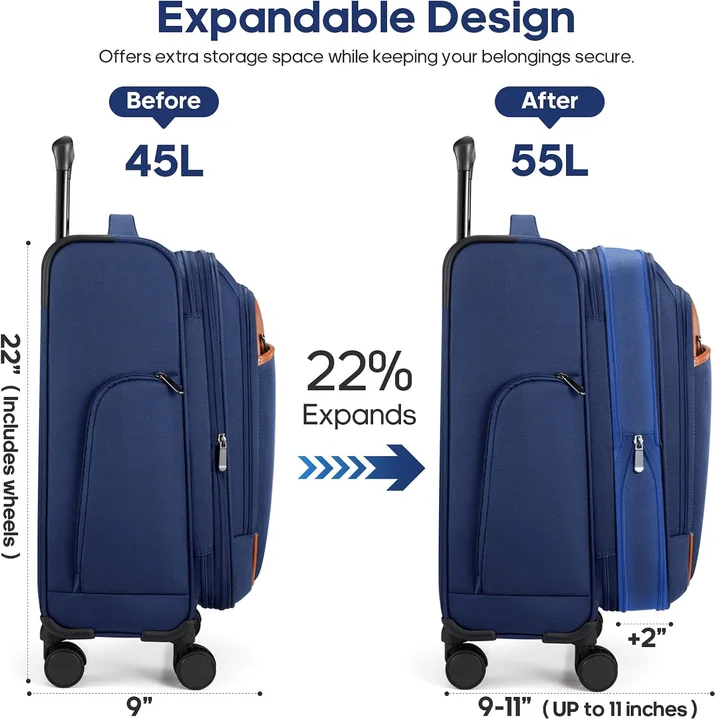
Almost every argument about luggage is an argument about one number. The airline publishes a limit, the maker publishes a size, and the two are measured differently. Understanding which is which takes about five minutes and saves the gate fee that ends a good morning.
This guide sets out the numbers that matter, where they come from, and how they translate into clothes in a bag. Every figure about this range is counted from the pages on this site.
What 22 by 14 by 9 actually means
The familiar cabin figure is 22 by 14 by 9 inches. It is not a law and it is not universal. It is the size most large United States carriers converged on for the overhead bin, and it is quoted in inches because the bins were designed in inches.
The important part is what the airline includes in that measurement. Wheels count. Handles count. The side pocket you stuffed a jacket into counts, because the sizer at the gate is a rigid box and the case either drops in or it does not.
Makers measure differently. A case sold as twenty inches is usually twenty inches of shell, and the wheels and the retracted handle sit outside that number. A twenty inch shell with two inches of wheel is twenty-two inches in the sizer. That is the whole reason a case can be honestly labelled twenty inches and honestly refused as oversized.
In this range 4 lines carry a twenty inch shell, and every one of them states the airline-approved size in the maker's own words. The table further down puts the shell size, the volume and the weight of each case side by side.
Cabin cases in this range
See all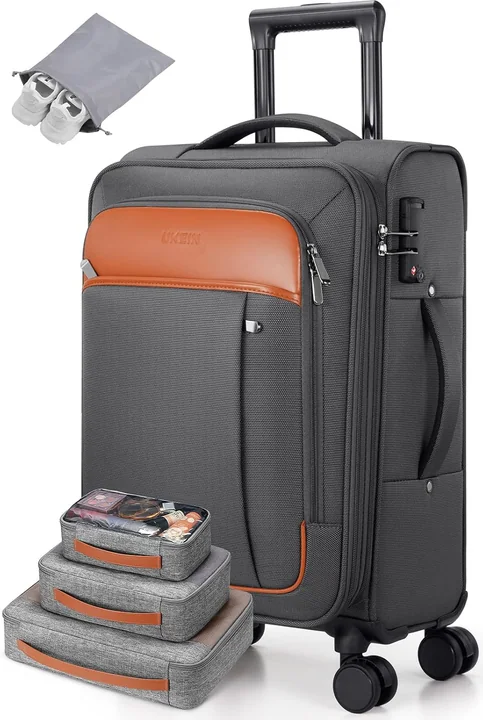

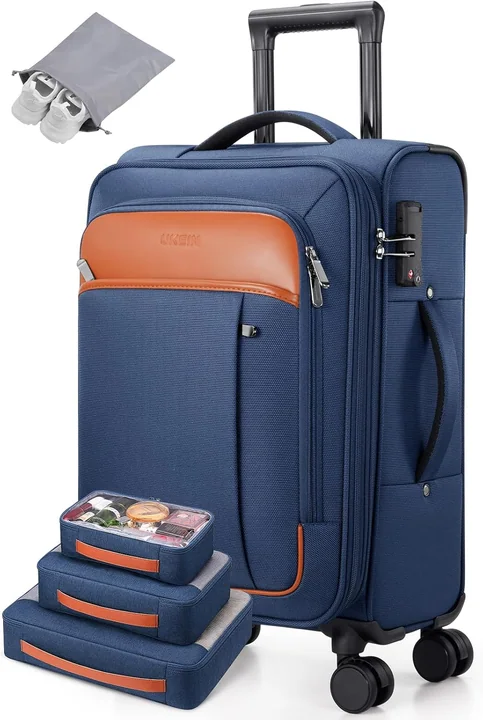
Softside Expandable Carry On Luggage 22x14x9 Airline Approved
20" · 45–55 L 4.5 out of 5 (161) $86.33The personal item is a second allowance, not a smaller bag
Most tickets carry two cabin allowances: a carry-on for the bin and a personal item for under the seat in front. The personal item is where a backpack belongs, and it is the allowance travellers waste most often.
Under-seat space is smaller than bin space and shaped differently. It is wide and shallow rather than deep, so a soft bag that squashes wins over a rigid one that does not. A backpack with a laptop pocket at the back and a flat profile slides in where a boxy tote will not.
The practical arrangement in this range is the pair the maker sells together. The case goes in the bin. The backpack rides on the case handle through the terminal on a sleeve stitched into its back panel, then comes off and goes under the seat. Nothing has to be carried on a shoulder at any point.
What that pairing does not solve is weight. Two allowances mean two bags, and the total is what you carry up the aisle. A packed twenty inch case and a packed forty litre backpack together weigh more than most people expect.
Bags that fit under the seat
See all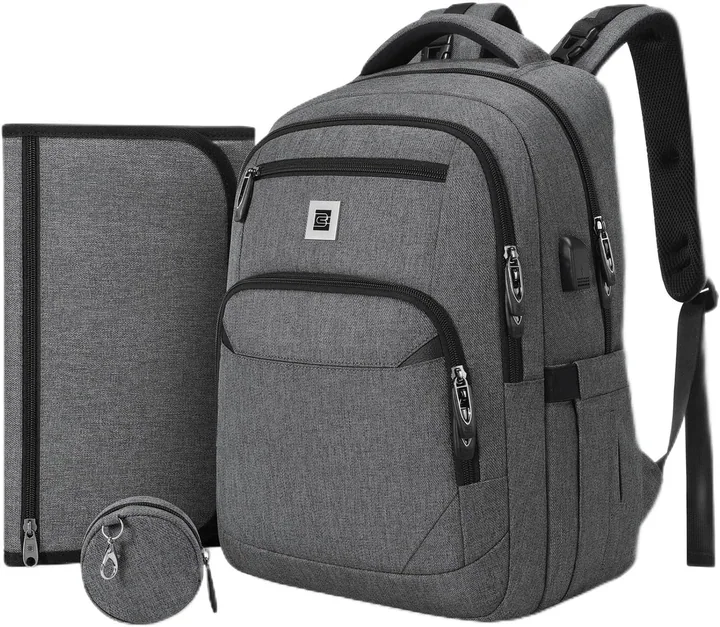
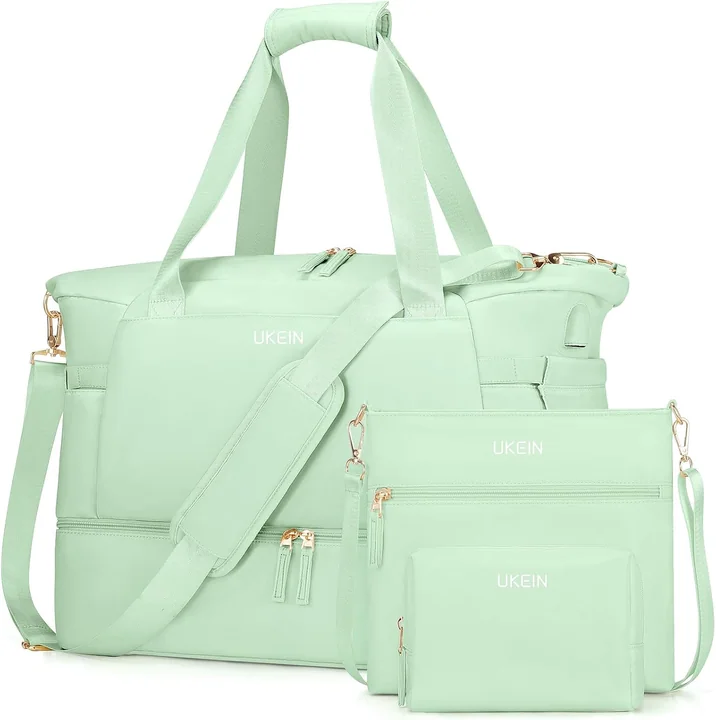
Travelling Bags, Travel Backpack Bag for Women with USB Charging Port & Shoe
4.5 out of 5 (75) $19.99 - $29.99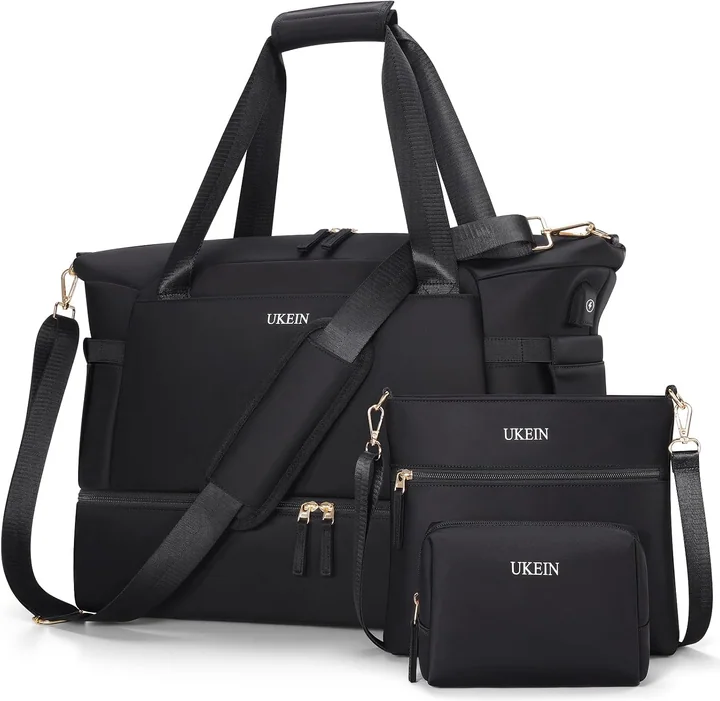
Travel Duffel Bag for Women, Gym Backpack Bag for Women with USB Charging Port
3 pieces 4.5 out of 5 (75) $19.99 - $29.99Liquids, and the one rule that has not moved
The liquids rule is the part of cabin packing that trips up people who fly twice a year. It is published by the Transportation Security Administration and it is short:
You are allowed to bring a quart-sized bag of liquids, aerosols, gels, creams and pastes in your carry-on bag and through the checkpoint. These are limited to travel-sized containers that are 3.4 ounces (100 milliliters) or less per item.
Transportation Security Administration, Liquids, Aerosols, and Gels Rule
Two details in that sentence do the work. The limit is per container, not per liquid, so a half-empty six ounce bottle is still a six ounce bottle and still goes in the hold. And the bag is quart sized, which is one bag per passenger rather than one per item.
This is what the toiletry bag in each of these sets is for. It is not a security-approved pouch and it does not need to be: a clear quart bag holds what goes through the checkpoint, and the toiletry bag holds everything that travels in the hold or waits in the hotel bathroom.
Twenty, twenty-four, twenty-eight
Three shell sizes cover almost every trip, and each one answers a different question.
Twenty inches is the cabin size. It holds three to four days of clothes for one person, it never leaves your sight, and it is the only size that cannot be lost by an airline. On a full flight it is also the size most likely to be taken from you at the gate when the bins fill.
Twenty-four inches is the week case. It goes in the hold, holds around sixty litres, and is still light enough to lift into a car boot with one hand. For most travellers it is the size that gets used twice a year and earns its space in the cupboard.
Twenty-eight inches is the family case, and it is the one that needs a warning. Its volume is far larger than the airline weight allowance permits. Packed full of clothes it will pass fifty pounds, and the excess baggage fee will cost more than the case did.
| Item | Shell | Type | Pieces | Volume | Weight | From |
|---|---|---|---|---|---|---|
| Luggage Sets 3Piece, Carry On Luggage 20in Sui | 20" | Hardside | 3 | not stated | 10.4 lb | $79.99 |
| Luggage Set with Backpack, Hardshell Carry On | 20" | Hardside | 3 | not stated | not stated | $69.99 |
| Expandable Carry On Luggage 22x14x9 Airline Ap | 20" | Softside | 1 | 45 to 55 L | not stated | $69.99 |
| Softside Expandable Carry On Luggage 22x14x9 A | 20" | Softside | 1 | 45 to 55 L | not stated | $86.33 |
| Luggage Sets 3 Piece, 24in Checked Luggage Wit | 24" | Hardside | 3 | not stated | 11 lb | $109.99 |
| Luggage Sets 3 Piece, 28in Checked Luggage Wit | 28" | Hardside | 3 | not stated | 11 lb | $119.99 |
The weights in that table are the empty case as the maker states it. Add clothes and the number that matters becomes the airline limit, not the volume.
Packing arithmetic, in days rather than litres
Litres are hard to picture. Days are easy. The rough conversion that holds up in practice is ten litres per day of clothing for one adult in mild weather, and closer to fifteen in winter.
That gives a working rule. A forty-five litre cabin case is four days in summer and three in winter. A sixty litre checked case is six days in summer and four in winter. A hundred litre case is two people for a week, which is exactly how families use it.
- Shirts and t-shirts are about one litre each rolled, so a week of them is a corner of the case rather than a layer.
- Jeans and trousers are three to four litres a pair, and they are the item most worth wearing rather than packing.
- Shoes are the expensive item at five to eight litres a pair. One pair worn, one pair packed, and no more.
- A coat is ten to fifteen litres compressed, and that is the argument for carrying it on your arm.
The arithmetic explains why expansion matters more on the way home than on the way out. Souvenirs, laundry that no longer folds flat and a coat you stopped wearing add up to about ten litres on a week-long trip.
Week cases, most rated first
See all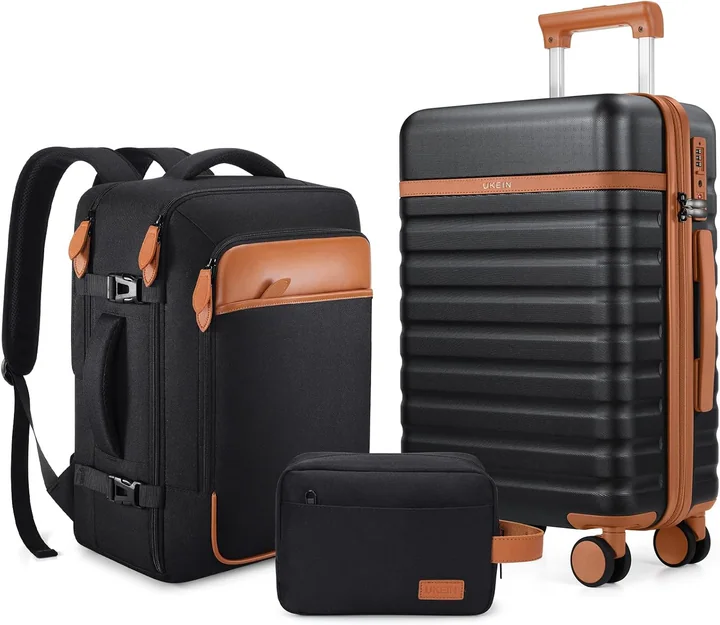
Luggage Sets 3 Piece, 24in Checked Luggage With Travel Backpack
24" · 3 pieces 4.8 out of 5 (37) $109.99Weight is the limit you actually hit
Almost nobody fills a checked case to its volume. Nearly everybody reaches the weight limit, and the limit is set by the airline rather than by the case.
Fifty pounds is the common allowance on economy tickets in the United States. A hard case of that size weighs between ten and twelve pounds empty, so the clothes allowance is closer to thirty-eight pounds than to fifty. That difference is one pair of boots and a hairdryer.
A cheap luggage scale settles the argument at home rather than at the desk. Weigh the case packed, and weigh it again after you have taken out the third pair of shoes. Airlines charge for the overage in whole tiers, so being one pound over costs the same as being fifteen.
The empty weight of each case in this range is in the table above. It is the one specification where a smaller number is always better, and the difference between the lightest and the heaviest case here is about a pound and a half.
What the sizer at the gate does not measure
A case can pass the sizer and still be a problem in the bin. Bins have a depth and a height, and a case that fits the box on the floor may not slide in wheels-first on a regional aircraft with a smaller cabin.
The reliable move is to put the case in wheels-first with the handle side up. That orientation uses the narrowest face, and it means the wheels take the scuff from the bin lip rather than the shell.
Regional aircraft change the arithmetic entirely. On a fifty-seat jet almost every carry-on gets gate-checked, which means it goes into the hold at the aircraft door and comes back at the door on arrival. Nothing fragile and nothing you need in flight should be in the case when that happens.
Colour is a practical choice at the carousel
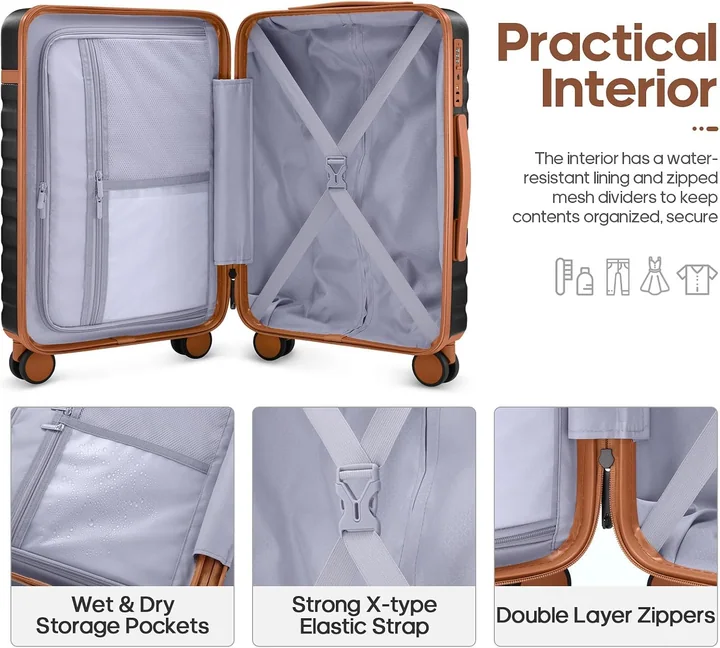
This range is made in 15 colourways across 11 lines, and the reason to care is the baggage carousel rather than the wardrobe. Black cases are the majority of every carousel, and a black case with a ribbon on the handle is still a black case at the far end of the hall.
Cream, pink, mint and the two greens in this range are visible from thirty feet. That is worth more than it sounds when a flight lands late and three carousels are running at once.
The trade is scuffing. A pale shell shows a scuff sooner than a dark one, and the textured finish on these cases is there to break up exactly that. Neither choice is wrong, and the difference is visible rather than structural.
Gate-checking, and what it does to your plan
A carry-on that never leaves your hands is the whole argument for cabin luggage. On a busy flight that argument can be taken away from you at the door, and knowing how it happens changes what you put in the case.
Bins fill by boarding group. When they are full the crew starts tagging carry-ons at the gate, and those cases go into the hold at the aircraft door. They usually come back at the door on arrival rather than on the carousel, which is quicker, but for the length of the flight the case is out of your sight.
Three consequences follow, and they are worth planning for before you leave home.
- Nothing you need in flight stays in the case. Medication, a charger, a book and a change for a spilled drink live in the personal item.
- Batteries come out. A power bank cannot travel in the hold, so a gate-checked bag has to be opened at the door to remove it.
- Fragile things are now hold cargo. A case handed over at the door is stacked and moved the same way as everything else.
The practical defence is boarding position rather than packing. Later boarding groups meet fuller bins, and on the aircraft types that fly short domestic routes the bins are small enough that gate-checking starts early.
Two wheels or four, on the ground you actually walk
Every wheeled case in this range uses four spinner wheels. That is the market standard now, and it is worth knowing what it trades away.
A spinner rolls upright beside you and carries its own weight. Nothing hangs off your wrist, which matters over the distances an airport actually makes you walk. On a smooth terminal floor it is effortless in a way a two-wheel case is not.
On a rough surface the trade reverses. Small castors drop into every gap between paving stones, and the case stops dead while your arm keeps going. The habit that fixes it is simple: tilt the case onto two of its wheels and pull. A spinner case will do this, and doing it on cobbles is the difference between wheels that last five years and wheels that last one.
This is also the reason the wheel end of a packed case should hold the weight. A bottom-heavy case tracks straight behind you. A top-heavy one wanders and tips at every kerb, and the tipping is what breaks a castor mount.
How many cases a household actually needs
The honest answer for most people is two, and the second one is smaller than they expect.
A cabin case covers the weekend, the work trip and the flight where losing the bag would ruin the week. A checked case covers the annual holiday. A third case earns its cupboard space only if two people travel separately or if one of you flies with sports equipment.
That is the argument behind the sets in this range: 5 of the 11 lines here arrive as a case with a matching backpack, which covers both cabin allowances at once. Buying a set is the cheaper route to the pair, and the pair is what most trips need.
The exception is worth naming. If you already own a backpack you like, a set means paying for one you will not use. The single cases on this site are listed separately for exactly that reason.
Sets that cover both allowances
See all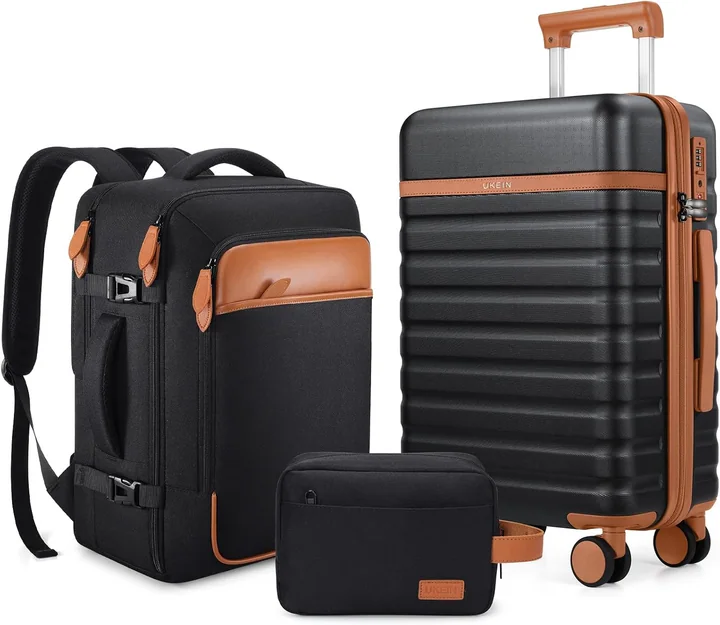
Luggage Sets 3Piece, Carry On Luggage 20in Suitcase Set With Backpack
20" · 3 pieces 4.6 out of 5 (2,666) $79.99 - $89.99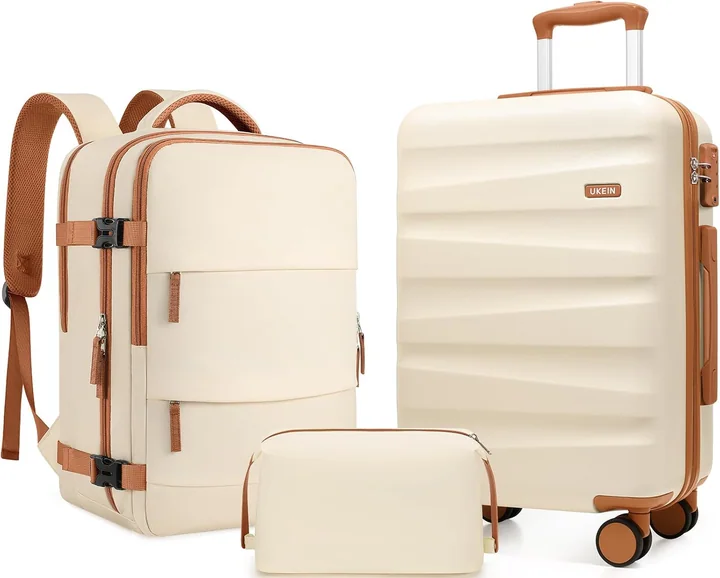
Luggage Set with Backpack, Hardshell Carry On Luggage Airline Approved
20" · 3 pieces 4.6 out of 5 (286) $69.99 - $79.99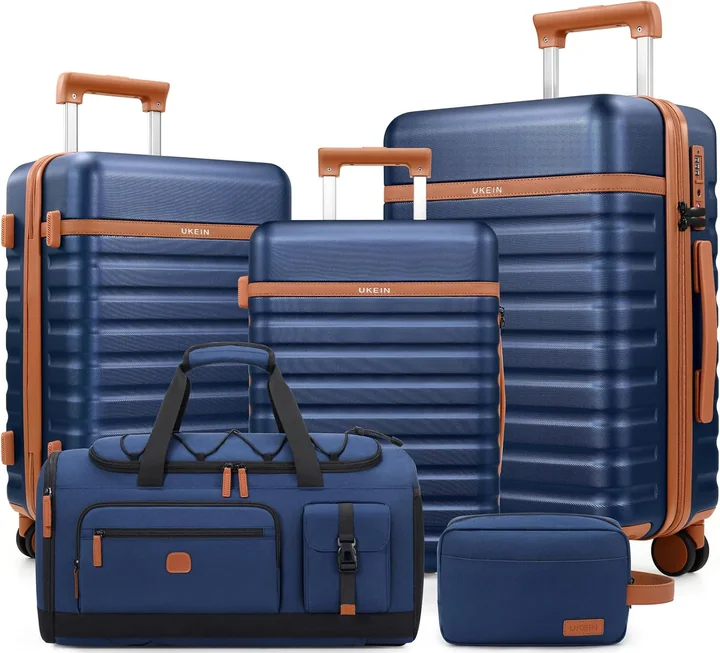
Luggage Sets 5Piece, Carry On Luggage Large Checked Suitcase Set
5 pieces 4.6 out of 5 (231) $129.98The same case in July and in January
A case does not change between seasons. What changes is the volume of a day of clothes, and the ratio is close to one and a half.
A summer day packs into about ten litres: a t-shirt, underwear, a pair of shorts, and a share of a pair of shoes. A winter day is nearer fifteen once a jumper and thicker trousers are in the pile, and that is before a coat that will not go in at all.
The arithmetic explains an argument people have every year. The cabin case that held five days in Lisbon holds three in Helsinki, and neither the case nor the packing changed. The clothes did.
There are two ways out of it and only one of them works. Wearing the bulk onto the aircraft is the reliable one: a coat carried over an arm is not baggage on any airline, and boots on your feet are not in the case. Compression bags are the other, and they trade volume for creases that a hotel iron then has to remove.
Sharing a case, and when it stops working
Two people can share one large case for a week. Two people cannot share one large case for a fortnight, and the reason is weight rather than volume.
A twenty-eight inch case packed for two adults over ten days passes fifty pounds while there is still room inside it. At that point the choice is a second checked bag or a smaller case each, and two cases at twenty-four inches carry more usable weight than one at twenty-eight.
Children change the sum differently. A child's clothes are small and light, so a family of three often fits into one large case and one cabin case rather than three separate bags. What does not fit is the child's own kit, and that is what a diaper backpack or a small rolling bag is for.
The five piece set in this range is built around exactly this case. It nests a twenty inch, a twenty-four inch and a twenty-eight inch case with a duffel and a toiletry bag, which is a household's luggage in one purchase and one cupboard.
Large checked cases
See all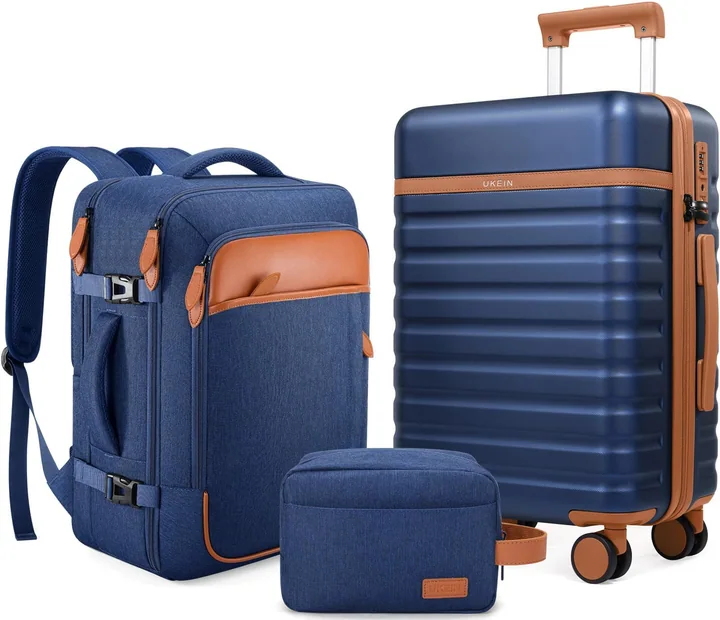
Luggage Sets 3 Piece, 28in Checked Luggage With Travel Backpack
28" · 3 pieces 4.2 out of 5 (37) $119.99What to look at in the shop, in order
Most of a case's life is decided by four parts, and none of them is the shell everybody photographs.
Start with the wheels. Spin each one with a finger. It should turn freely, keep turning for a moment, and sit square to the case with no wobble at the mount. A wheel that is stiff when new does not loosen.
Then the handle. Pull it to full extension, hold the case at the top and push sideways. There will be some play and there should not be much. A handle that rattles in a shop rattles at every kerb for the rest of its life, and it is the part that cannot be replaced.
Then the zip. Run it round the full circuit twice. It should not need force at the corners, which is where a cheap zip binds. Alloy pulls, which these cases state, are heavier than plastic and do not snap in cold weather.
Then the inside. Open both halves. One should have cross straps and one should have a zipped divider, because that is what turns a box into two rooms. A case with an open shell on both sides packs into a single shifting pile.
Colour and price come after those four. That order feels wrong in a shop and it is the order that decides whether the case is still in use in four years.
Under the seat, measured rather than guessed
Under-seat space is the allowance travellers use worst, and the reason is that nobody publishes its shape. The bin has a number. The space under the seat in front has a gap between two legs and a depth that stops at the seat track.
What that means in practice is that height is the constraint, not volume. A bag that is tall and thin slides in. A bag of the same litres that is short and deep does not, because it hits the seat frame before it is halfway back.
Soft bags win here for the obvious reason: they change shape. A forty litre backpack that is full to the top will not go under a seat. The same backpack with the top compartment half empty flattens and does.
The bags in this range carry a flat back panel with a laptop sleeve, and that panel is what makes them slide rather than wedge. The rounded outer pockets go on top when the bag is pushed in, not against the floor.
One more detail decides comfort rather than fit. Anything you want during the flight goes in the outer pocket before the bag goes under the seat, because retrieving the bag mid-flight means standing up and holding up the row behind you.
Four expensive mistakes, in the order people make them
Every one of these costs money at an airport rather than at home, which is what makes each one worth naming.
- Buying by volume instead of by weight. The largest case is rarely the right one, because the airline allowance runs out first.
- Measuring the shell and not the wheels. The sizer at the gate takes the whole object, and two inches of castor is the usual difference.
- Putting the power bank in the hold. It is not a preference, it is a rule, and a gate-checked bag has to be reopened at the door.
- Packing the liquids last. The bottle that is over the limit is always the one already in the wash bag, and the checkpoint bin is a poor place to discover it.
None of those is about the case being good or bad. They are about the numbers on the ticket and the numbers on the shell being different measurements of different things.
The five-minute check before a flight
- Measure with wheels and handle. Stand the packed case against a tape and write the number down once. It does not change.
- Weigh it packed. A luggage scale costs less than one overweight fee.
- Move the batteries. Power banks and spare cells travel in the cabin, never in the hold.
- Empty the quart bag onto the bed and put it back. The bottle that is over the limit is always the one you forgot about.
- Photograph the packed case. If it goes missing, the claim goes faster with a picture of the case and its contents.
The last one takes ten seconds and matters more than it should. What happens when a case does not arrive is covered in the guide to hard and soft construction, along with the federal floor on what an airline owes you. The packing guide covers the order things go into the case.
Sets, most rated first
See allLuggage Sets 3Piece, Carry On Luggage 20in Suitcase Set With Backpack
20" · 3 pieces 4.6 out of 5 (2,666) $79.99 - $89.99Luggage Set with Backpack, Hardshell Carry On Luggage Airline Approved
20" · 3 pieces 4.6 out of 5 (286) $69.99 - $79.99Luggage Sets 5Piece, Carry On Luggage Large Checked Suitcase Set
5 pieces 4.6 out of 5 (231) $129.98Sources we read
| Source | Published by | Read |
|---|---|---|
| Liquids, Aerosols, and Gels Rule | Transportation Security Administration | 5 September 2026 |